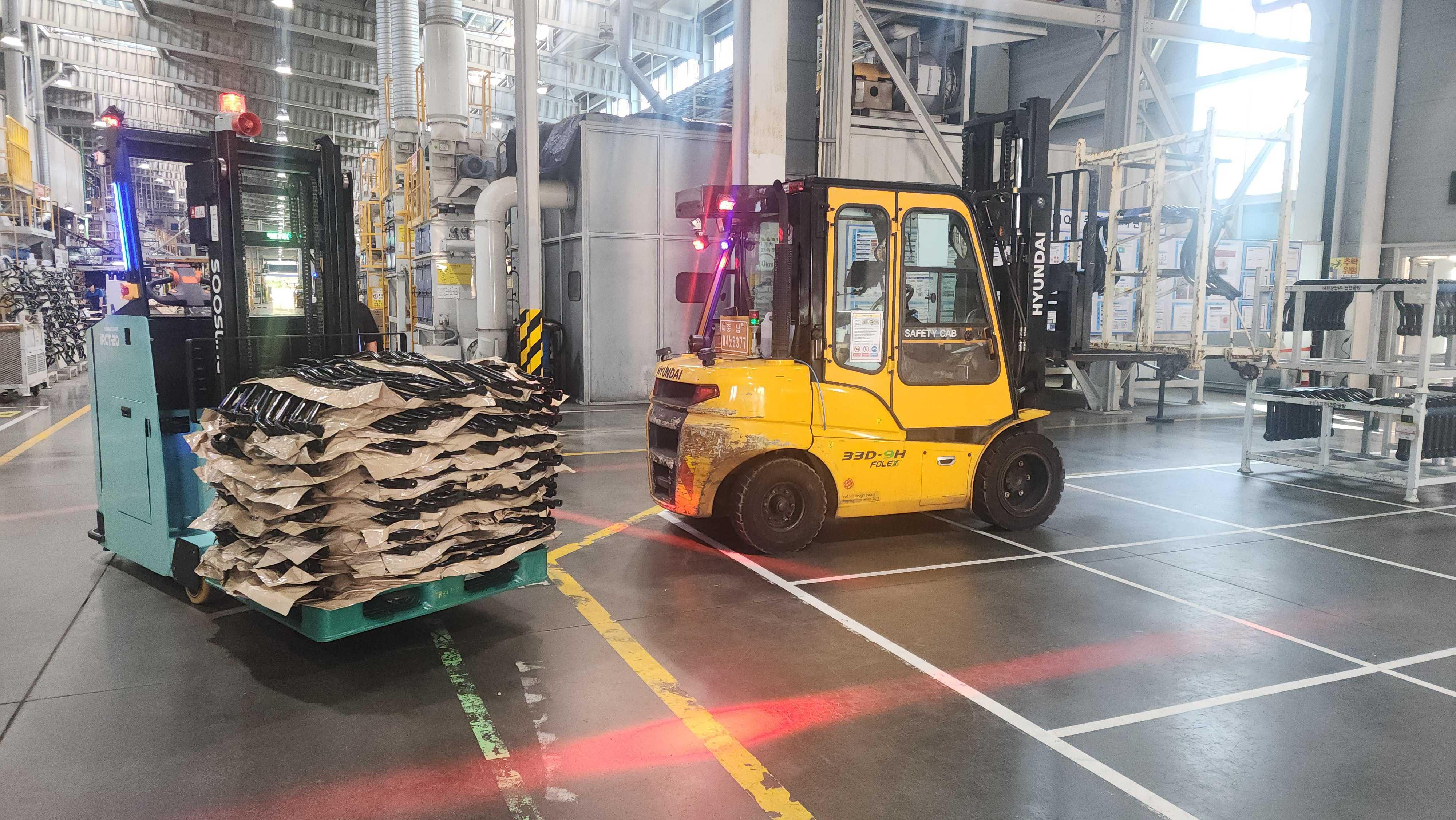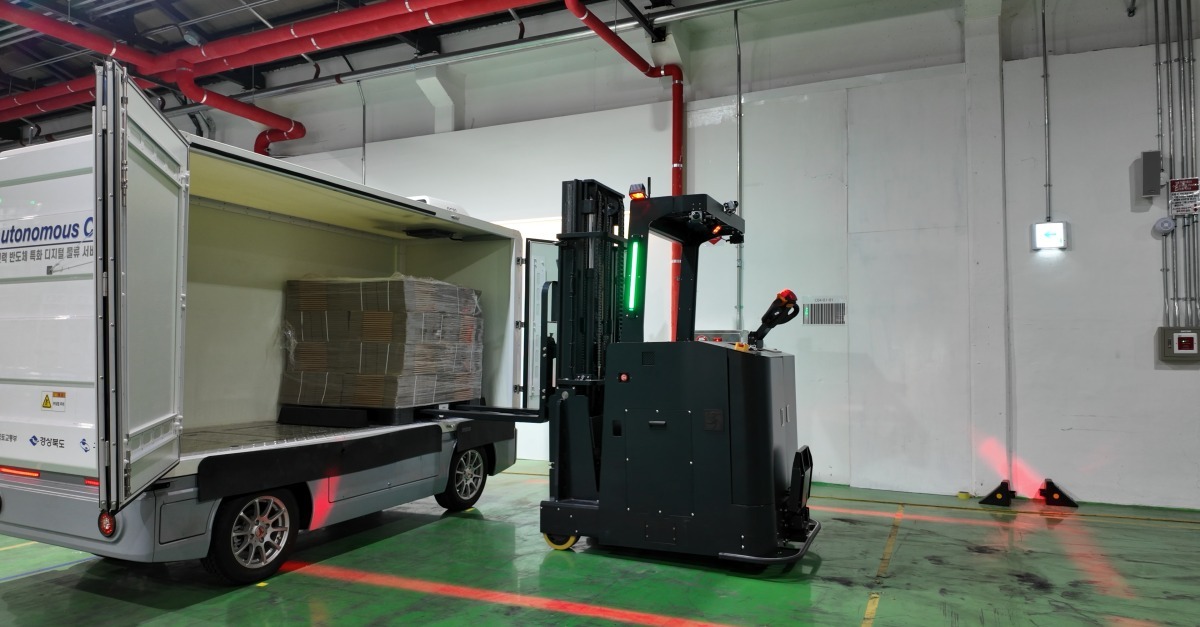

Why no robot scales until its ROI is proven — and what opens up the moment it is.
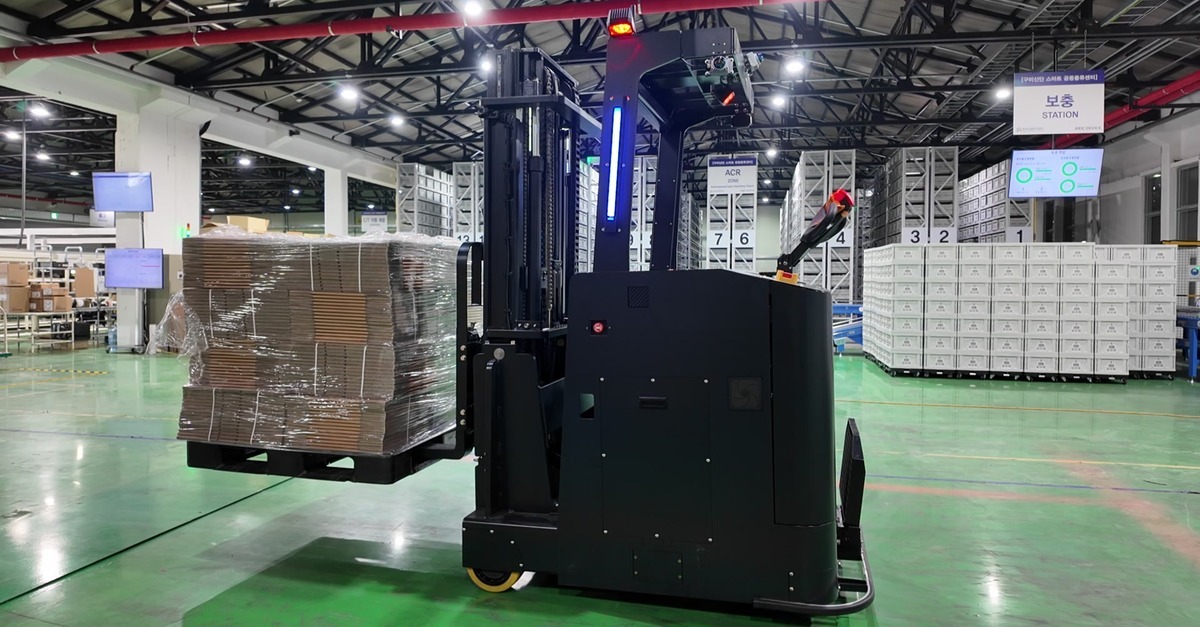
Everyone in this industry loves to talk about what robots can do. I want to talk about the one thing that decides whether they ever get to do it: ROI.
#1 The Only Thing That Really Matters
Why does anyone deploy a robot in the first place? Strip away the excitement, and the honest answer is almost always cost. A brownfield warehouse already runs on human hands — the forklift moves, the picking, the loading are all being done by people today. Robotic forklifts, humanoids, cobots — none of them are strictly necessary. A project might kick off under a grand banner like "full automation," but sooner or later every stakeholder in the room asks the same question: does this actually save us money? If the answer isn't a clear yes, the project stalls. ROI isn't one factor among many. It's the factor that has to hold before anyone else's reasons get to matter.
#2 I've Watched This Wall Stop Robots Before
I've seen this play out more than once. At Universal Robots, the word "collaborative" pushed the industry toward robots working shoulder-to-shoulder with people — and a wave of robot cafés followed. Impressive demos, real enthusiasm. But once you measured the productivity and flexibility against the cost, the ROI often wasn't there, and most of it never scaled.
Motion2AI was the sharpest version of the same lesson. A shiny, innovative solution — the innovation lead was thrilled, and at first everyone loved it. Around the three-month mark, the questions began: "so what's next?" By the one-year renewal-and-expansion decision, someone from operations or finance would finally say it out loud: so what? The champions — the visibility, quality, and safety people — would fight hard, and if we were lucky we'd keep the contract. Expanding it was brutally difficult. Without quantifiable results — headcount reduced, the material-handling fleet optimized — the product's brilliance alone couldn't carry the business.
And here's the uncomfortable part: looking back, you could usually tell early which products would make it and which wouldn't. At Motion2AI, real customer success only began when we delivered clear, provable value backed by data. And for a robot, the clearest value of all is ROI — cost saved.
(A quick aside: when serving robots first appeared, I was skeptical — direct contact with people, exactly the pattern I'd watched fail. They scaled anyway. Then I saw the price: a couple hundred dollars a month, a small fraction of the labor it stands in for. At that price, nobody needed my opinion — the math had already answered.)
#3 ROI Is a Wall — and a Gate
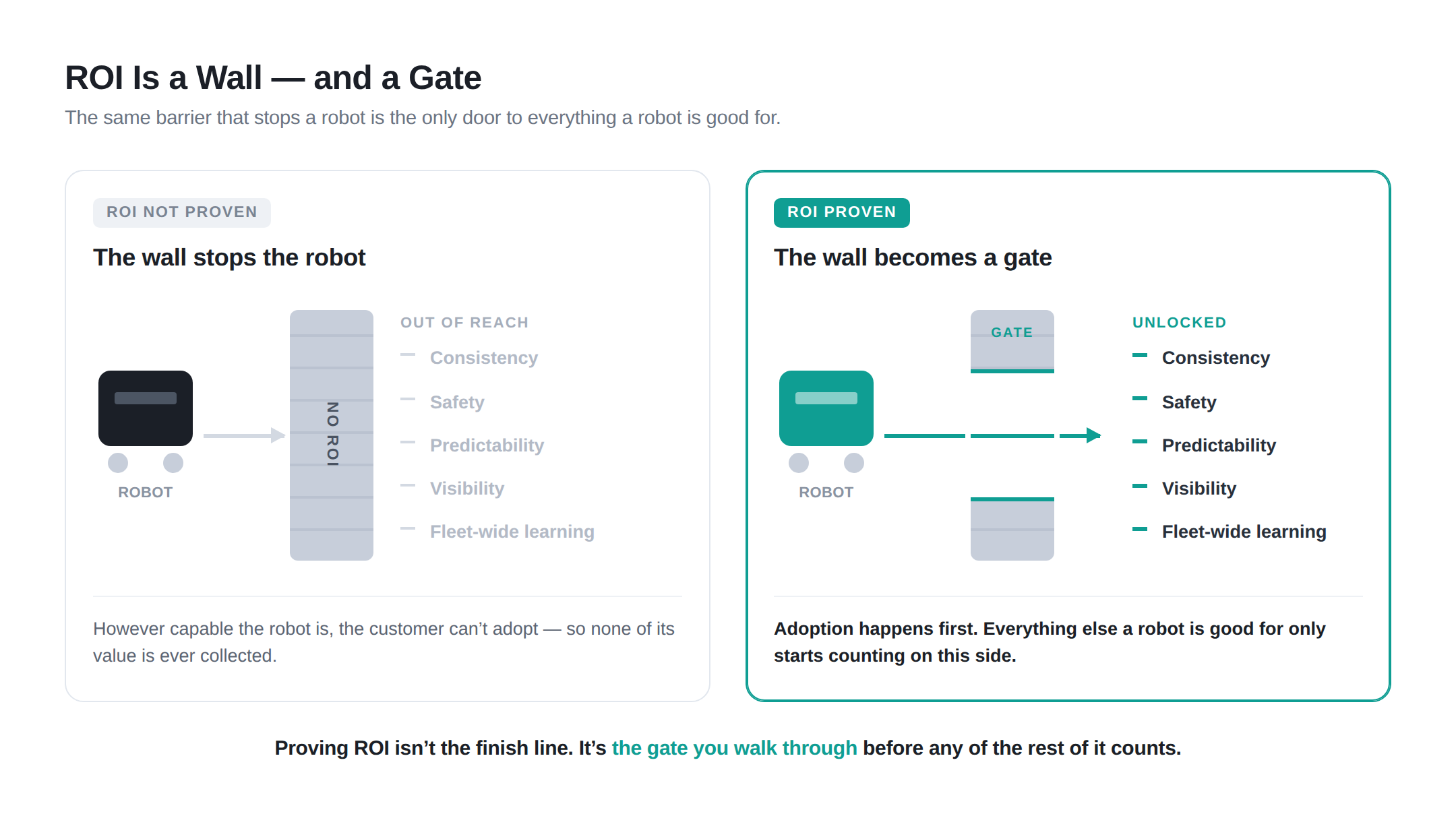
Nobody argues that robots aren't good. They don't tire. They're more consistent on quality, they're safer, and they make the invisible visible. In the end, they're simply more productive. The problem is never whether robots are good.
The problem is the wall. If you can't prove ROI, the customer can't adopt — full stop. No amount of "but look how capable it is" gets you over it.
But a wall has another side. The moment a solution proves its ROI clearly, that same wall becomes a gate. The customer adopts — and only then does everything else on the list start to count for anything. Consistency, safety, predictability, visibility into work that used to be invisible, a fleet where teaching one robot teaches all of them: none of that is worth a thing while you're still standing on the wrong side of the wall. Proving ROI is what lets a customer walk through and actually collect it.
#4 So, Riibotics
That's why, from our earliest days, we've been almost obsessive about one thing: finding a product and a market where the ROI is clear. Not the most exciting robot, not the most advanced demo — the one whose value a customer can measure, and prove. Because we learned the hard way that in this industry a clear ROI isn't the finish line. It's the gate you have to walk through before any of the rest of it counts.